BESTSELLER FACTORY INVOLVED IN TRADE UNION DISPUTE IN TURKEY
Investigative journalist
(for the original news https://danwatch.dk/xxxxxx/ )
Danish clothing giant Bestseller has become embroiled in a dispute between local trade unions at one of the factories it uses in Turkey. The conflict has led to protests because employees have been fired without compensation, according to the accusations. Bestseller is aware of the situation and expects a sustainable solution to be found. The factory denies having acted in violation of workers' rights.
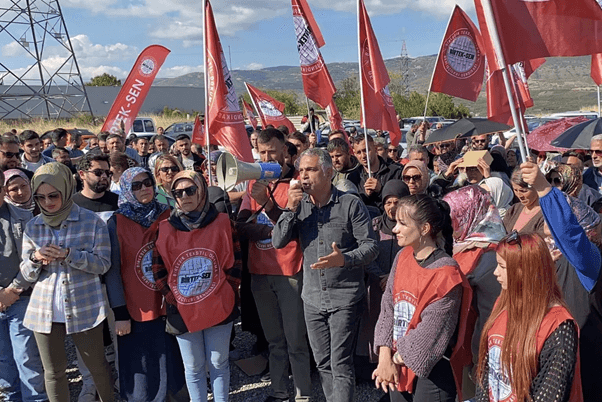
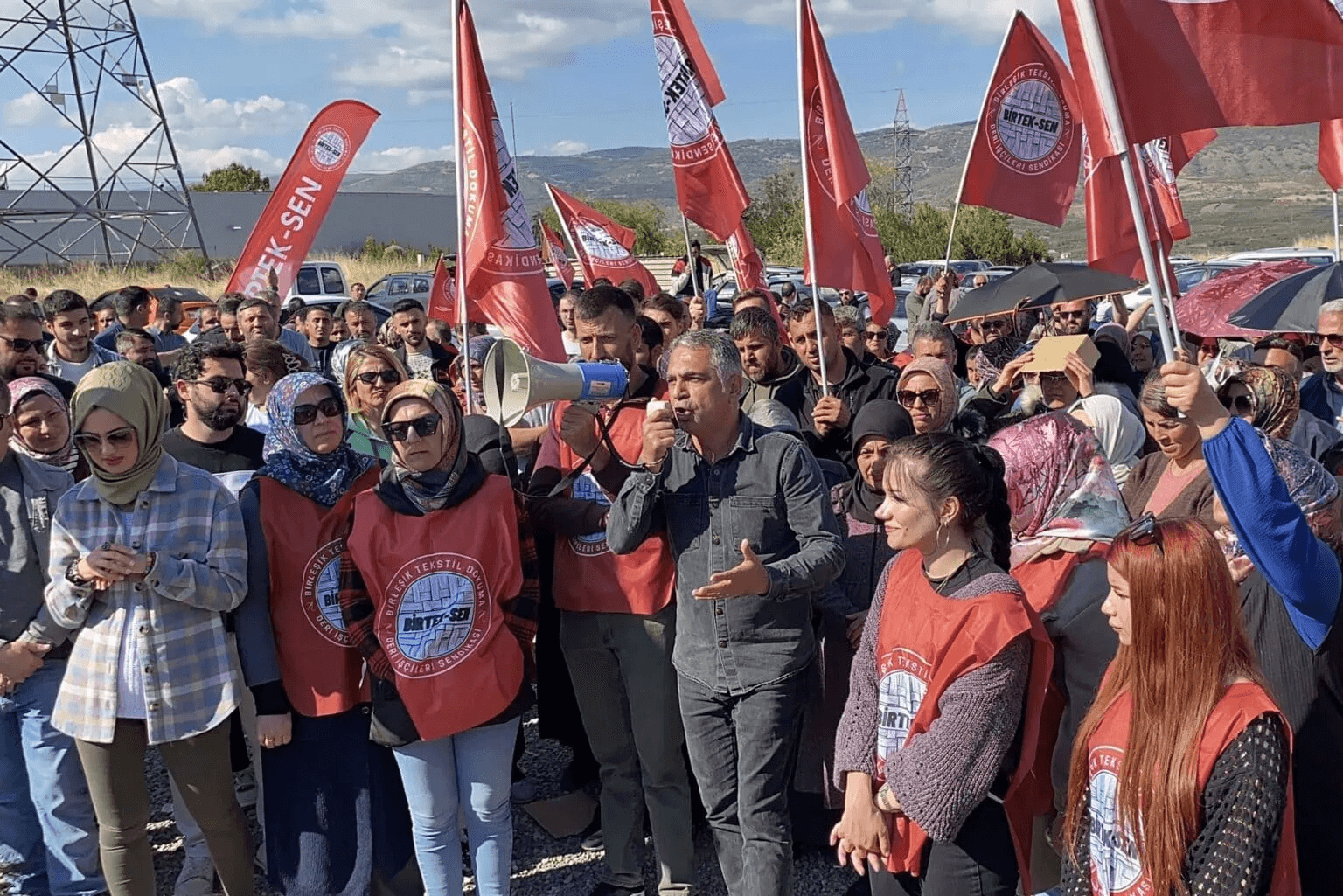
In recent months, there have been several protests in the Turkish city of Tokat, where the Şık Makas clothing factory is located. Photo: The Turkish trade union BİRTEK-SEN
In Turkey, one of the clothing factories used by the Danish clothing company Bestseller has come under fire because local workers accuse the factory of poor working conditions and of not paying full compensation after dismissing over 900 employees.
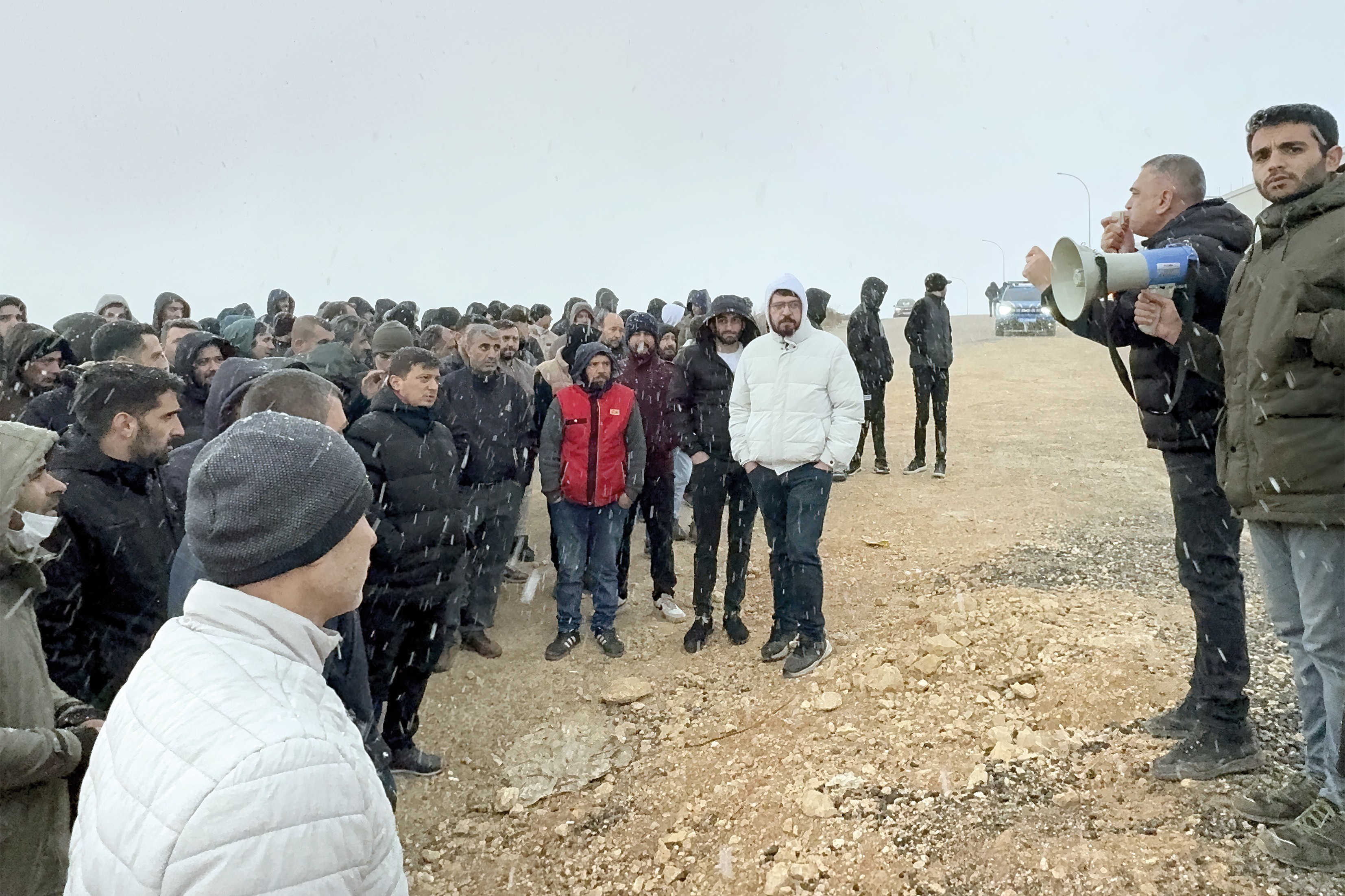
For several weeks, protests have been taking place against the Şık Makas factory in the Turkish city of Tokat in central Turkey, and in solidarity with the employees, there have also been protests in Istanbul, Ankara and Izmir in front of international brand stores such as H&M, Zara and Levis. The factory is one of the largest textile companies in the country and has supplied products to Bestseller's brands Jack and Jones and Only.
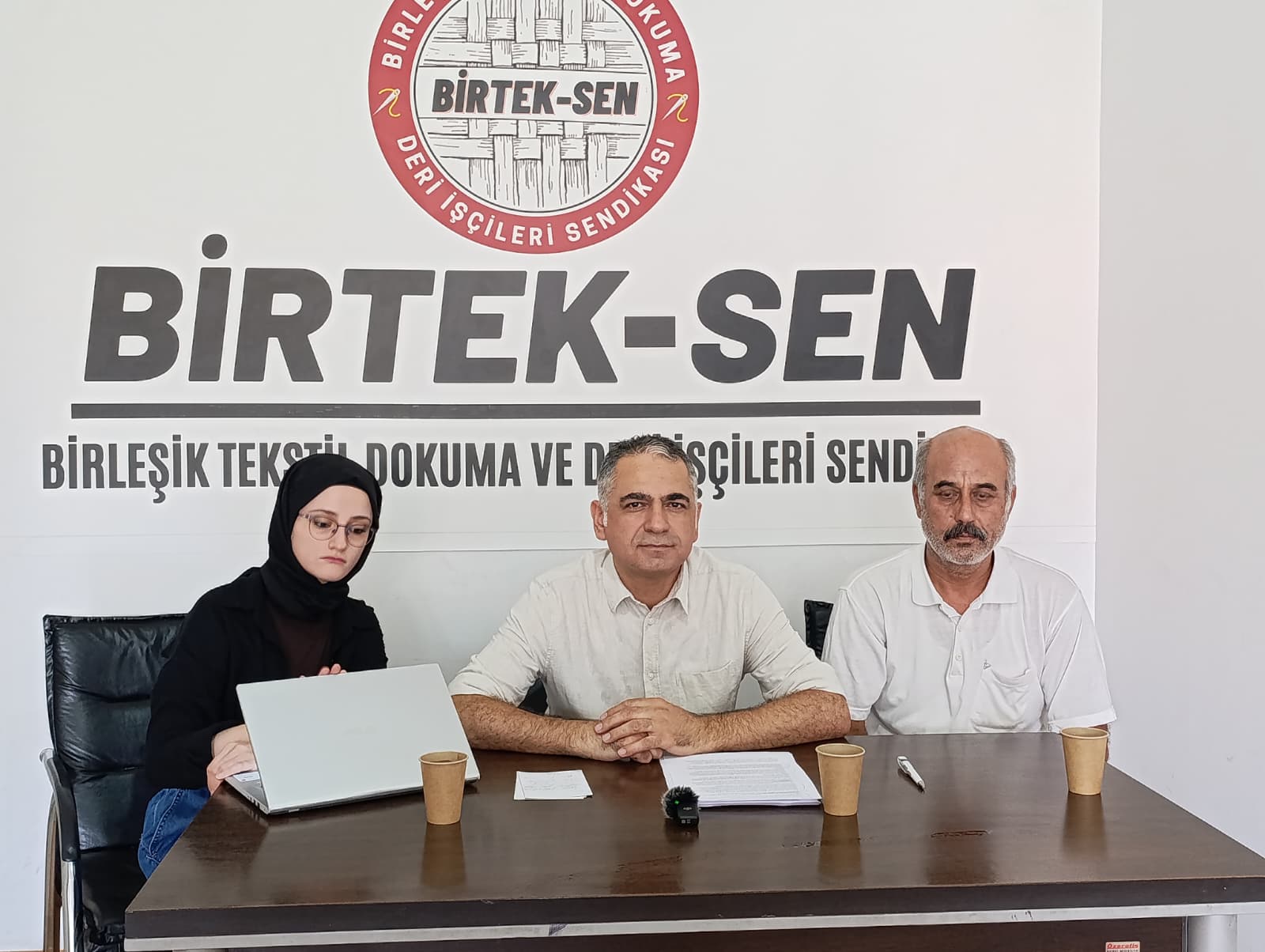
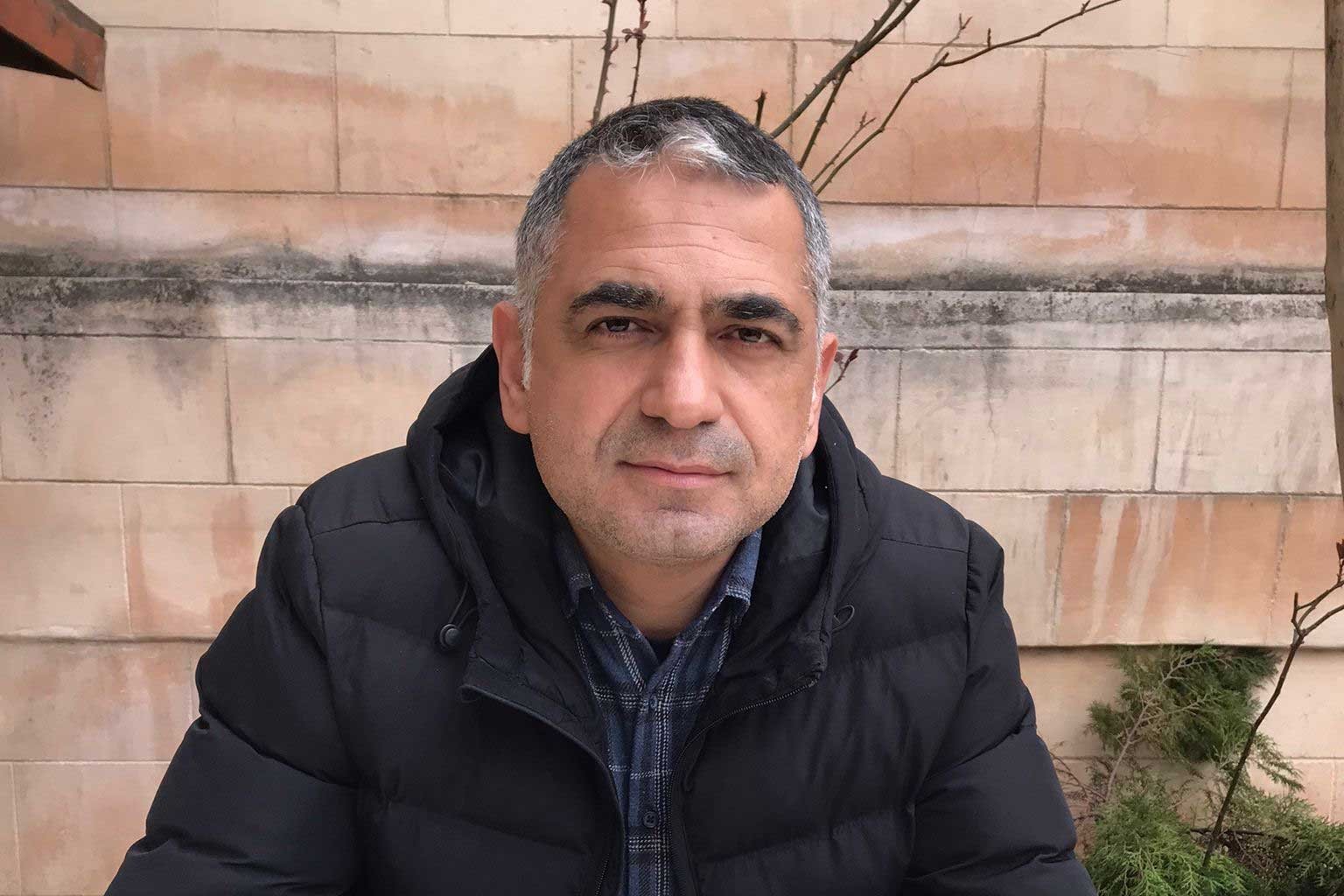
Mehmet Türkmen, chairman of the Birtek-Sen trade union, which supports the protesting workers, believes that the Şık Makas factory violates workers' rights and that the trade union affiliated with the factory is not doing its job properly.
"There have been violations of rights, people are working in slave-like conditions for the lowest wages, and employees have not received proper compensation after being dismissed. Bestseller and the other international brands are acting as if nothing has happened, despite clear, well-documented and persistent violations of human rights and workers' rights. They are helping to normalise these violations," he says.
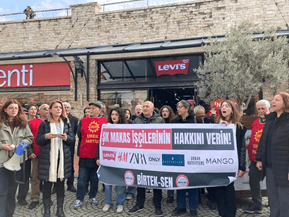
A protest in front of a Levi's store in the city of Izmir. Photo: The trade union BİRTEK-SEN
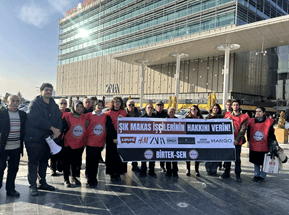
A protest in Turkey's capital Ankara at H&M and Zara stores. Photo: The trade union BİRTEK-SEN
According to the chairman, the conflict began because the factory had not paid its employees' wages for three months. The situation escalated in October when more than 900 employees were fired because, according to Mehmet Türkmen, they wanted to join his trade union because they were dissatisfied with the trade union officially affiliated with the factory.
According to Mehmet Türkmen, there have been general problems with working conditions at the factory in recent years, with employees experiencing irregular wage payments, low wages, forced overtime and a lack of equality for the many female employees.
Although, according to Mehmet Türkmen, the factory has chosen to pay the outstanding wages, there are still employees who have not received full compensation, and therefore the protests continue.
"They have been fighting for months to get the compensation they are entitled to. We expect the factory and the clothing brands to take responsibility for the injustices and meet all the demands," he says.
At Bestseller, Felicity Tapsell, Head of Responsible Sourcing, says that Bestseller is aware of the conflict at Şık Makas in Turkey.
"This is a matter we are taking very seriously, as it concerns basic labour rights and employees' claims for compensation. We expect Şık Makas to engage constructively in dialogue with both the trade union and the affected employees so that their rights are respected and a sustainable solution is found. Together with other brands that have goods produced at the factory, we are using our influence as far as possible to support this process and emphasise the need for a quick and fair solution," reads a written response.
This is not the first time that there have been problems at some of the foreign factories that supply products to the Danish fashion giant Bestseller. Most recently, in October, Danwatch reported problems at a number of factories in Myanmar, including cases of forced unpaid overtime, threats against speaking out, precarious employment conditions and wages of 30 Danish kroner a day with no benefits.
Bestseller factories in Myanmar accused of poor working conditions.
Rejects accusations
The trade union that officially has the right to negotiate at the factory rejects all of Mehmet Türkmen's accusations and accuses his trade union of creating unrest among employees.
"Their actions have risked escalating the conflict and jeopardising jobs and production instead of contributing to sustainable and constructive solutions. Through the efforts of our union, the employer has paid all outstanding wages to the workers at the Şık Makas factory, and the workers have full access to their legal rights, including severance pay and termination pay," according to a written response from the trade union Öz İplik İş Sendikası, which states that compensation will be paid in instalments to dismissed workers during the new year.
Yusuf Oklay, CSR director at the Şık Makas factory, also states in a written response to Danwatch that the company complies with the standards required by the international fashion brands with which it collaborates in the Global Framework Agreement (GFA) between multinational companies and global trade unions.
https://www.industriall-union.org/global-framework-agreements
“Due to the economic challenges facing our company, there have been temporary liquidity challenges, which have led to delays in some payments. However, we would like to emphasise that all employees' legal rights have been covered through a mutually agreed payment plan. This includes severance pay, termination pay, unused holiday pay, outstanding wages and all other statutory rights. There has been no confrontation or pressure on employees. On the contrary, we have sought to maintain a constructive and understanding environment throughout the process," reads the written response from Yusuf Oklay, who is responsible for the company's work with social responsibility, sustainability and ethical considerations.
Read the full responses here
Full Response by Öz İplik İş
“At Şık Makas Tekstil, the authorised and organised trade union has been the Öz İplik İş Trade Union for many years. As wages have not been paid regularly and on time for approximately two years, our union has organised and coordinated protests and collective actions with organised workers when necessary. These protests are legitimate trade union activities aimed at protecting the fundamental rights of workers.”
“Furthermore, workers have the right to join any union of their choice, as guaranteed by the Turkish Constitution and international agreements. Workers are free to choose their union. However, attempts by a union without collective bargaining authority to leave workers without a collective agreement, create unrest among workers, and disrupt industrial peace cannot be justified.
Our union has been active since 1978 as part of the labour movement and is one of Turkey's most established unions. Representing approximately 38,000 members, our union consistently defends workers' rights and interests under challenging conditions. In contrast, Birtek Sen is not an authorised union at this workplace and has significantly fewer members. In our assessment, Birtek Sen's approach is largely based on external strategies targeting international brands and, in practice, it has taken the risk of escalating conflicts in a way that could jeopardise jobs and production, rather than contributing to sustainable and constructive solutions. This is the second instance in which our union has been the target of such actions.
“Birtek Sen is not the authorised union at Şık Makas Tekstil. Even if Birteksen obtains a numerical majority of 50% +1, according to the current legal framework, the union will not have the right to negotiate a collective agreement at this workplace. Therefore, there is no legal or legitimate basis for the union to take initiatives that could leave workers without collective agreement protection.
“As a result of our intensive negotiations and union efforts, including cooperation with international brands, we worked to prevent the complete cancellation of orders and the risk of mass unemployment for workers. Thanks to our union efforts, the employer paid all unpaid wages to the workers at the Şık Makas factory in Tokat. Furthermore, the social security code of all workers previously dismissed under SGK code ‘22’ has been changed to ‘4’. This correction provides workers with full access to their legal rights, including severance pay and dismissal compensation.
According to the written protocol signed between our union and the employer, severance pay payments to dismissed workers will commence in January and will be paid in instalments between February and May. Our union is closely monitoring the implementation of this payment plan. From the outset, our aim has not been to escalate tensions, but to safeguard workers' employment and legal rights through dialogue and social dialogue mechanisms. We will continue to manage and monitor this process responsibly."
-------------
Mehmet Türkmen from the Birtek-Sen trade union rejects the claim that all the workers' demands have been met, and he finds it incomprehensible that the factory is unable to pay the workers full compensation in one go instead of paying in instalments.
‘The company is making new energy investments in Turkey and has expanded its activities in Egypt. But when it comes to paying the workers, they say they are struggling to pay. They are using the crisis as an excuse,’ he says.
Yusuf Oklay, CSR Director
“Firstly, we would like to state that our company has no official connection with the union mentioned in your message. We operate in full compliance with the standards required by the international brands we work with under the Global Framework Agreement (GFA). Within this framework, the only legally authorised and recognised union in our company is ÖZİPLİK-İŞ, which is affiliated with the labour relations structure accepted by our brand partners. All work-related processes are carried out in coordination with this union.‘
’Regarding the protests, we have not taken any action against our employees. We fully accept that our employees have the natural and legitimate right to express themselves and protest peacefully. This is a fundamental freedom, and we have treated these actions with respect, calmness and restraint. No conflict or pressure has been applied against employees; on the contrary, we have taken care to maintain a constructive and understanding environment throughout the process."
"Due to the financial difficulties faced by our business, temporary liquidity issues arose, leading to delays in some payments. However, we would like to emphasise that all employees' legal rights have been addressed through a mutually agreed payment plan. This includes severance pay, redundancy pay, unused holiday pay, unpaid wages and all other legal rights. These agreements were reached through direct communication and mutual consent, ensuring that no employee's legal rights were compromised.
“At the same time, we would like to point out that the group pursuing certain actions is not a legally authorised trade union in our company and does not have collective bargaining authority at our workplace. We believe that work-related issues should be addressed through legitimate and legally recognised channels, and we remain committed to constructive dialogue within this framework.”
‘We are actively managing our cash flow and taking measures to stabilise our financial situation. The situation is gradually improving, and we expect this positive trend to continue. Our priority remains to act transparently, legally, and responsibly while fulfilling all our obligations to our employees and maintaining long-term operational sustainability.’
An industry under pressure
Turkey is one of the world's leading manufacturers of clothing and textiles, supplying products to a wide range of Danish and European clothing companies. However, the industry has recently been under pressure due to the country's high inflation, rising interest rates, rising raw material prices and competition from Asian markets.
Several textile companies have reduced their workforce, cut back on wage payments and rights, or shut down production altogether. As a result, there are a number of trade union struggles in various parts of Turkey to ensure that workers' rights are respected, says Mehmet Türkmen from the Birtek-Sen trade union.
‘The minimum wage in Turkey is currently well below the poverty line. Workers in the textile industry earn less than 20 per cent of the amount needed to buy basic foodstuffs for a family of four. In addition, many have been dismissed without compensation or have received only a very small amount,’ he says.
Mehmet Türkmen believes that international fashion brands have a shared responsibility to ensure decent working conditions in factories in Turkey.
‘They have many of their products manufactured here, so it is only to be expected that they help to rectify the injustices,’ he says.
More about the same company: Bestseller